
WE SAVE SEEDS TO PRESERVE
Great Stories & Better Flavors
PRODUCTS
Selecting for Quality
A short time ago, crops were bred for flavor, nutrition, and reliability — not for long haul transportation. Our varieties are different than what you might find in the store today and we fully intend to keep it that way.
OUR PROMISE
We’re a bit fussy when it comes to quality. Any seeds passing from our hands to yours are selected from the very best of our harvest. If we wouldn’t grow it, we won’t sell it.
PURPOSE
A Passion for Preservation
Each growing season, we maintain hundreds of historic, endangered, and downright delicious varieties. Far too often, our work serves as a crucial lifeline for the very existence of these crops, many of which now balance on the edge of extinction.
YOUR PURCHASE HELPS
Seeds are a living embodiment of our collective history. When a variety is lost, a part of the human story disappears alongside it. This is a trend that we seek to end.
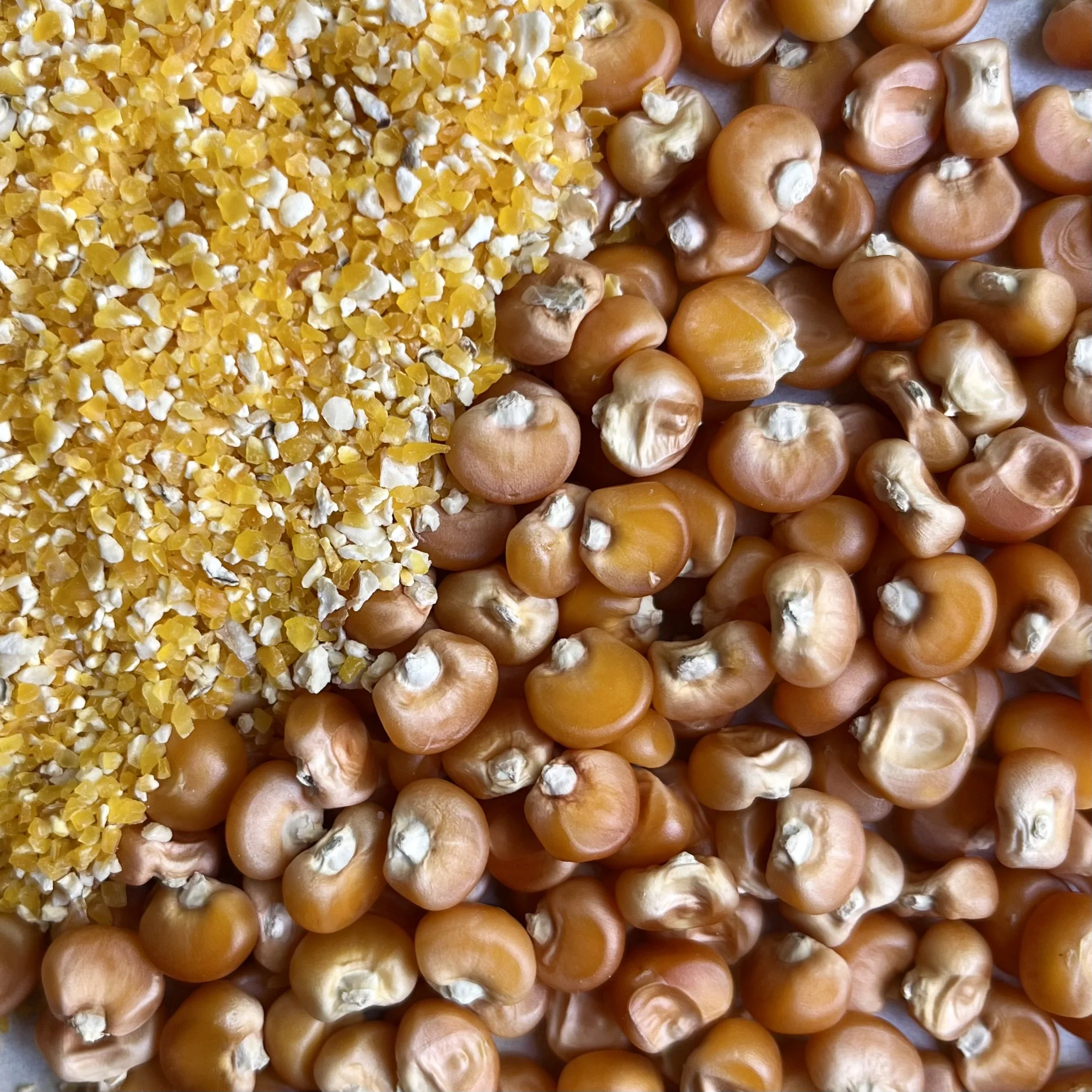
Product Description: (Zea mays) An ancient First Nations flint corn driven to extinction in the land it first called home, but not before becoming a prized kitchen staple of Italy’s working class. For culinary purists, Otto File is perhaps the only flint corn capable of producing a truly authentic Italian polenta, for it was this variety from which the modern rendition of the dish was first created. High levels of nutritious antioxidant carotenoids give this variety its distinctive golden-orange hue and rich buttery flavor. Open-pollinated. 50 seeds per packet.
Growing Information: Direct seed in full sun after all danger of frost has passed. Sow seeds 5 cm (2 inches) deep and 25 cm (10 inches) apart in rows 60 cm (2 feet) apart. Or plant as many indigenous people did, in tight clusters of 4-5 plants, separated from each other by about 1 meter (3 feet).
Once the husks are thoroughly dry and the kernels can no longer be dented with your fingernail, the ears are ready for harvest. Store in a cool, dry place to continue drying until the kernels can be easily removed from the cob, like loose teeth. 125 days to maturity.
How To Save Corn Seeds
Saving corn seeds is incredibly simple! Once the ears are dried thoroughly, peel back the papery husks and work the seeds loose with your thumb. Dry further if needed, then atore the seeds in a cool, dry location until you are ready to plant again.

Product Description: (Cucumis sativus) Of all the cucumber varieties we grow, Suyo Long is among the very best! Not only are its ribbed 12-18” fruit stunningly beautiful but its flesh is also notably crisp, juicy, and sweet. Being a burpless type, this variety has thin skin and very few seeds to get in your way.
Suyo Long originated in Northern China, where it is believed to have been grown as far back as 100 BCE. Sought-after traits such as adaptability, exceptional eating qualities, and disease resistance expanded this variety’s popularity throughout Asia (and eventually to western nations) as time went on. Open-pollinated. 30 seeds (1g) per packet.
Growing Information: To trellis your cucumbers, sow 3 seeds every 8-10 inches at the base of your trellis. Once sprouted, thin the seedlings to just one plant every 8-10 inches. For an earlier harvest, you can start your seeds indoors 3 weeks before your expected last frost. While we recommend trellising, Suyo Long can also be grown on the ground. To do this, build up mounds of soil roughly 12 inches tall and 18 inches wide. Space your mounds about 3 feet apart along the entire length of the row. Direct seed 4-5 seeds per mound (and later thin to just one plant per mound) or transplant directly into the mound. 65 days to maturity.
Seed Saving: Allow cucumbers to grow on the vine far past the harvest phase, until they are fully ripe and their skin has changed color (typically yellow/orange). Scrape the contents of the entire seed cavity into a clean container and add a small amount of warm water. Leave the container (uncovered or covered with cheese cloth) to ferment at room temperature for three days, stirring daily. As the gel coat around the seeds breaks down, viable seeds will sink to the bottom. After fermentation, skim off any material that is still floating and pour the rest into a wire sieve to rinse thoroughly. Dry the cleaned seeds completely and store in an airtight glass jar until use.
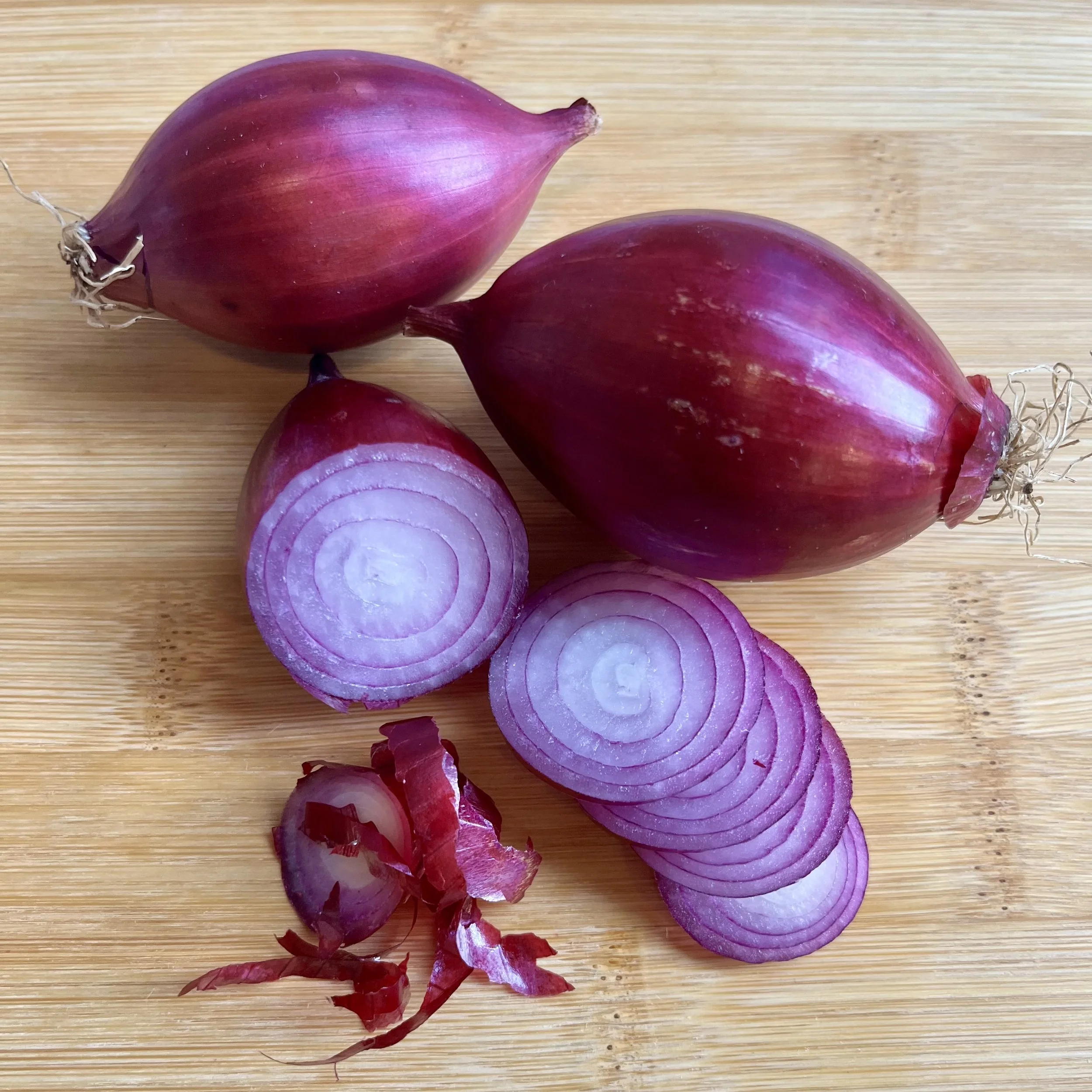
Product Description: (Allium cepa) The Tropea onion is a prized Italian heirloom that has been grown on the cliffs Monte Poro for more than 4000 years. It is believed that this onion was introduced there by Phoenician sailors, possibly returning from ancient Assyria or Babylonia.
There are two distinct varieties of Tropea grown today; Rossa Tonda (round) and Rossa Lunga (long), both of which are known for their exceptionally sweet flavor — so sweet, in fact, that some say when grown under the right conditions, these onions can be eaten fresh like ripe fruit. Open-pollinated. 1/2 teaspoon per packet.
Growing Information: Sow outdoors 1/4” deep as soon as the soil can be worked in the spring indoors, or start indoors 3-4 weeks before the last spring frost. Thin plants to 6” spacing. 90 days to maturity.
How To Save Onion Seeds
Onions are a biennial crop, so you will need to select the healthiest looking bulbs from your harvest (free from cuts or bruises) and allow them to dry until the skin is dry and papery. Wrap each individual onion in newspaper and lightly pack them all into a cardboard box.
Store the box in a cool location until spring, checking on them after the first month to remove any bulbs that begin showing signs of rot. A root cellar, attic space, or shed work well for this, so long as the temperatures don’t drop below freezing.
As soon as the soil can be worked in the spring, your bulbs should already have shoots beginning to emerge. Plant outdoors 1-2 feet apart and allow the plants to flower. Collect your seeds once the flowers are dry. Winnow to remove the chaff.

Product Description: (Triticum aestivum) Named for the blushed appearance of its stalk upon maturity, Purple Straw was one of the very first pastry wheats ever grown in the United States and it was used in some of the earliest iterations of the classic southern biscuit.
This wheat first emerged from the Virginia Piedmont region during the era of the American Revolution. Despite a modest yield, its adoption among Mid-Atlantic and Southern grain growers was both wide-reaching and remarkably swift. In the words of food historian David Shields, this period of turmoil was a major catalyst for the rise of Purple Straw, “[setting] in motion a number of developments that would cause the eclipse of the old settler wheats of the colonial era”.
Devastating seed shortages were the first of these developments, soon followed by the introduction of the Hessian Fly, which some believe to have hitched a ride in the straw bedding of the Hessian mercenaries fighting for England. From that moment on, the fly inflicted immense damage on grain crops as it migrated through the newly united colonies each year.
This heritage grain helped to keep the United States fed while this country was still fighting to establish its very existence. While still widely grown up until the 20th century, it too was eventually replaced by newcomers and was believed to be extinct until its rediscovery in 2015.
We may be the first to begin selling these seeds since Purple Straw’s disappearance, but we are not the ones who deserve the credit for its return. For that, you can thank David Shields (Carolina Gold Rice Foundation), Glenn Roberts (Anson Mills), and Rick Boyles (Clemson University) for their dedication and tireless work that made this possible. Soft red winter type. 100 seeds per packet.
Growing Information: Direct sow in the fall (or as soon as the soil can be worked in the spring), as this wheat requires cold weather to properly vernalize. Sow seeds 1 cm (1/2”) deep with 10 cm (4”) spacing in rows 15 cm (6”) apart. When the plants are nearing ankle height, re-sow any patches with thin germination.
Harvest once the stalks have dried down thoroughly and the grains can no longer be dented with your fingernail. If necessary, cut the stalks at the base and tie them into bundles to finish drying indoors. Once ready, separate the grain and stalks with a thresher or by hand, then winnow the isolated grain to remove any remaining chaff. Fall planted. Early maturing.
How To Save Wheat Seeds
Saving wheat seeds is incredibly simple but if you don’t have a mechanized thresher, be sure to wear gloves. Once the seed heads are dry, rub them between your hands to break the seeds loose. Winnow off the chaff, then store the cleaned seeds in a cool, dry location until you are ready to plant again.