 Image 1 of 1
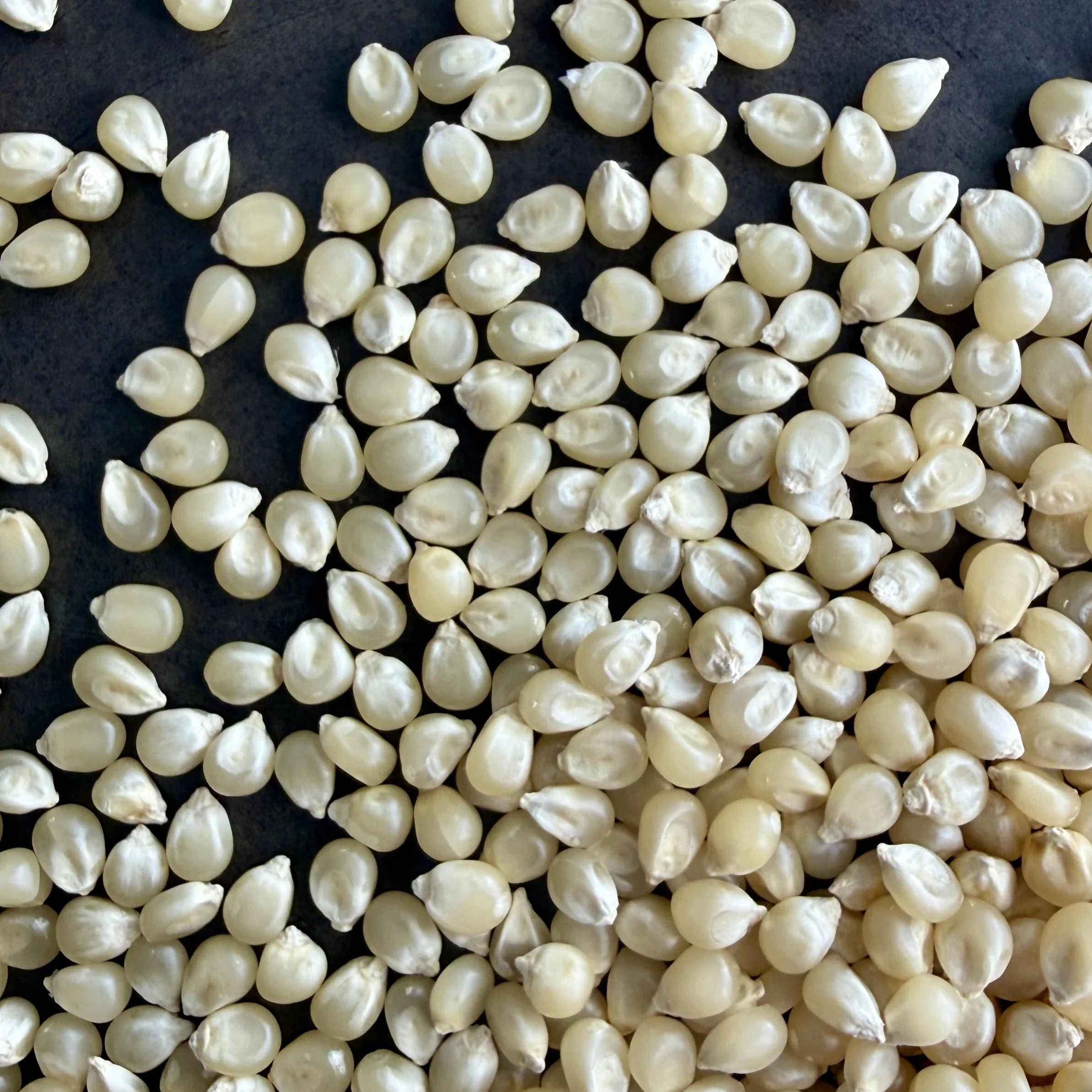
Product Description: (Zea mays) Though it carries a foreign name, this heirloom popcorn was introduced and popularized right here in the United States. The earliest record of Japanese Hulless is found in the 1918 catalog of the Livingston Seed Company, where it was described as “a new dwarf growing pop corn, heavy yielder, attractive ears peculiar in form, deep grains and almost free from hull when popped.”
Within a few short years, nearly every major seed company in the country was selling it (a fittingly explosive debut for a popcorn variety). The 1921 Cashman’s Seeds catalog reported that “poppers throughout the country are insisting on the Japanese Hulless” and that it was “sought by growers more than any other [variety]”. Just a year earlier, the DeGiorgi Brothers catalog claimed the variety was “used in China and Japan in place of breakfast cereals” — a statement which is almost certainly untrue but reveals the marketing strategy that made this popcorn so popular.
Throughout the early 20th-century, many products were adorned with the name “Japanese” to make them sound more refined and exotic to American consumers. Japan was commonly associated with delicate craftsmanship and novelty at the time, making this label an effective selling point. That strategy quickly fell out of fashion in the 1940s (for reasons best discussed another time) but Japanese Hulless continued to thrive, largely thanks to the latter part of its name.
Unlike nearly every other popcorn on the market, Japanese Hulless rarely gets stuck in your teeth! The pericarp or “hull” (otherwise known as the annoying brown flaky bit) of this variety is exceptionally thin, causing it to shatter so thoroughly when popped that you can enjoy an entire bowl without needing to break out the floss.
Growers will find it convenient as well. The plants are pleasantly compact, topping out at 4-5 feet tall and yielding around 3-6 ears per stalk. Harvest five days after silks appear for young ‘baby corns’ (like you’d find in Chinese-American cuisine) or wait until the ears are fully mature for popcorn. 100 seeds per packet.
Growing Information: Direct seed 5 cm deep (2 inches) and 25 cm (10 inches) apart after all danger of frost has passed. Space rows about 1 meter (3 feet) apart. Plant in full sun and keep the plants well watered. 105 days to maturity.
How To Save Corn Seeds
Saving corn seeds is incredibly simple! Once the ears are dried thoroughly, peel back the papery husks and work the seeds loose with your thumb. Dry further if needed, then atore the seeds in a cool, dry location until you are ready to plant again.
Product Description: (Zea mays) Though it carries a foreign name, this heirloom popcorn was introduced and popularized right here in the United States. The earliest record of Japanese Hulless is found in the 1918 catalog of the Livingston Seed Company, where it was described as “a new dwarf growing pop corn, heavy yielder, attractive ears peculiar in form, deep grains and almost free from hull when popped.”
Within a few short years, nearly every major seed company in the country was selling it (a fittingly explosive debut for a popcorn variety). The 1921 Cashman’s Seeds catalog reported that “poppers throughout the country are insisting on the Japanese Hulless” and that it was “sought by growers more than any other [variety]”. Just a year earlier, the DeGiorgi Brothers catalog claimed the variety was “used in China and Japan in place of breakfast cereals” — a statement which is almost certainly untrue but reveals the marketing strategy that made this popcorn so popular.
Throughout the early 20th-century, many products were adorned with the name “Japanese” to make them sound more refined and exotic to American consumers. Japan was commonly associated with delicate craftsmanship and novelty at the time, making this label an effective selling point. That strategy quickly fell out of fashion in the 1940s (for reasons best discussed another time) but Japanese Hulless continued to thrive, largely thanks to the latter part of its name.
Unlike nearly every other popcorn on the market, Japanese Hulless rarely gets stuck in your teeth! The pericarp or “hull” (otherwise known as the annoying brown flaky bit) of this variety is exceptionally thin, causing it to shatter so thoroughly when popped that you can enjoy an entire bowl without needing to break out the floss.
Growers will find it convenient as well. The plants are pleasantly compact, topping out at 4-5 feet tall and yielding around 3-6 ears per stalk. Harvest five days after silks appear for young ‘baby corns’ (like you’d find in Chinese-American cuisine) or wait until the ears are fully mature for popcorn. 100 seeds per packet.
Growing Information: Direct seed 5 cm deep (2 inches) and 25 cm (10 inches) apart after all danger of frost has passed. Space rows about 1 meter (3 feet) apart. Plant in full sun and keep the plants well watered. 105 days to maturity.
How To Save Corn Seeds
Saving corn seeds is incredibly simple! Once the ears are dried thoroughly, peel back the papery husks and work the seeds loose with your thumb. Dry further if needed, then atore the seeds in a cool, dry location until you are ready to plant again.